Mineral finishes with real depth, applied by hand by our own crews.
European painting technique from Spain brought to Florida.
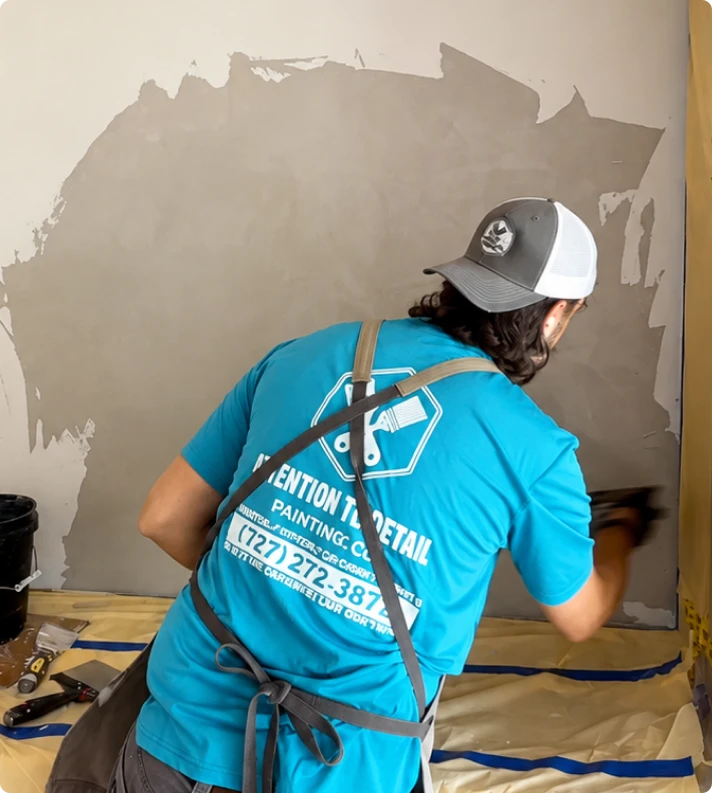
Limewash, Venetian plaster, and Roman clay are mineral coatings with centuries behind them, and they do something ordinary paint can’t: they carry depth. The surface shifts through the day as the light moves across it, soft in the morning, deeper by late afternoon.
In a room with a lot of Gulf light coming through, that’s the difference between a wall you painted and a wall people notice.
These finishes also need someone who has actually applied them. There’s no roller technique that gets you there.
People often use these names interchangeably. They’re related, they all start with lime, and they give you very different results. Here’s how they compare.
Finish | Limewash | Venetian Plaster (polished) | Roman Clay | The look | Matte, lightly textured, cloudy movement across the surface | Polished, glassy, close to real stone | Suede-soft with a low sheen and visible depth |
|---|---|---|---|
Feel | Flat and velvety | Smooth and cool to the touch | Smooth with a faint stone texture |
Where it shines | Fireplace mantels, accent walls, and entire interiors | Entryways, dining rooms, powder baths, range hood surrounds | Living rooms, bedrooms, and hallways. Not for wet areas |
On the estimate visit we’ll talk through which one fits the room, the light it gets, and the wall you’re putting it on. Some walls are right for one and wrong for the other two. We’ll bring sample boards as well, so you can see and touch the finishes you’re considering before you decide.
The world of decorative finishes is a wide one, and these three are where most people start. Ask us about the other techniques we work in.
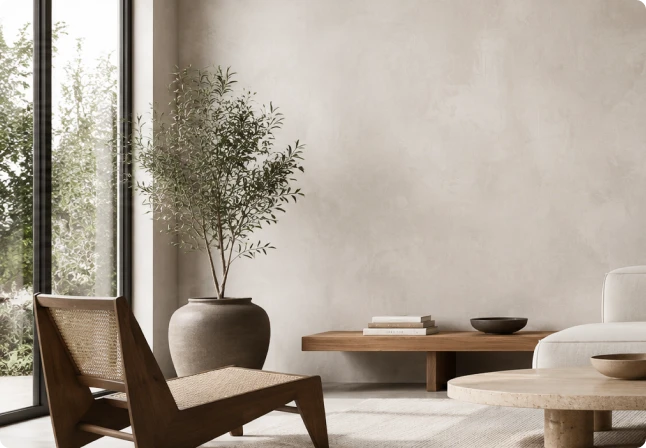
Slaked lime, water, and natural pigment. It soaks into the surface and bonds with it instead of forming a skin on top, which is why limewashed walls tend to wear rather than peel. The finish is deliberately uneven, and that’s the point: it moves, it clouds, it changes with the angle of the light.
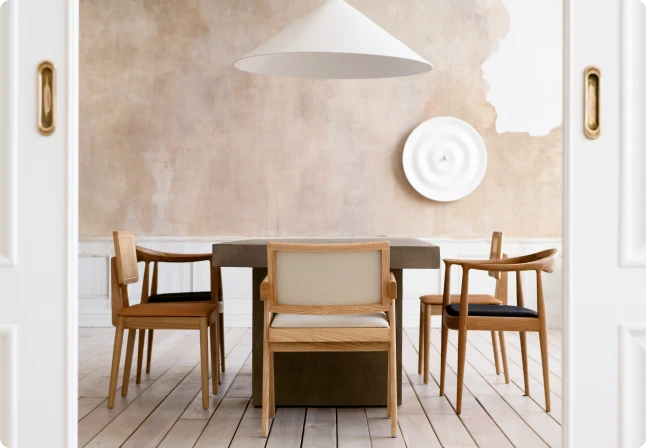
Lime and real powdered marble, troweled on in thin layers and burnished until it comes up polished. The marble is why it reads like stone once the light catches it. It belongs on the surfaces people stand close to: an entry wall, a dining room, the wall behind a range hood.
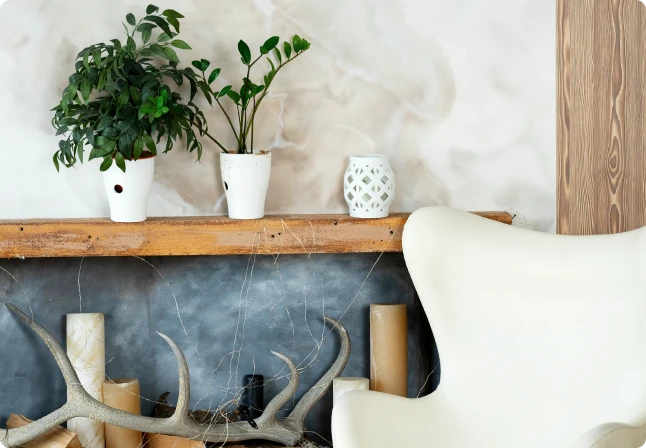
A matte lime finish with visible depth and a thin stone texture under the hand. It’s where most people land when they want the plaster look without the shine. Keep it out of wet areas, though. Showers and splash zones want a different finish, and we’ll point you to one.
These finishes sit closer to art than to paint. A limewash or plaster wall gives a room a background with movement in it, something quiet that your furniture and your art can sit against. It reads as depth rather than flat color, and it keeps changing as the light moves across the day. Most people who call us about it have seen one somewhere and can’t quite say why that room felt different. This is what they were looking at.
We apply specialty finishes on interiors across Pinellas County and Northwest Tampa, including:
Accent and feature walls in living rooms, dining rooms, and entryways.
Whole-room interiors where you want the texture everywhere, not just on one wall.
Fireplace surrounds and chimney breasts
Range hoods, niches, and archways
Bathrooms and powder rooms, sealed appropriately for the moisture
Ceilings, which is where plaster tends to surprise people
Wet areas, where the finish allows it. A few of these can be taken right into a shower, and we’ll tell you which ones can and which can’t
Not every surface is ready to be coated with these finishes. Drywall, previously painted walls, and anything slick need the right mineral primer or a base coat first. We handle prepping the walls to accept the finish, and we’ll tell you at the estimate what your walls will need before.
Specialty work lives or dies on two things: the substrate underneath and the hand applying it. Here’s how we work.
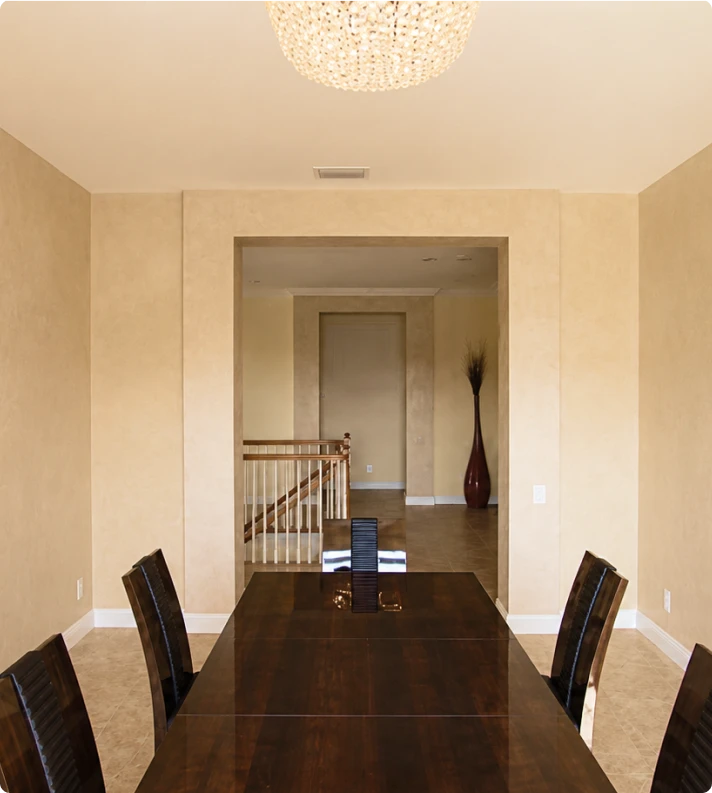
We will look at your walls, check what’s under the existing finish, and talk about the look you’re after. Bring some photos you like as reference so we can prepare ourselves and understand your expectations.
This is the step that matters most, and it’s the one people skip. Lime finishes look different on a screen than they do on your wall in your light. We prepare samples in the finishes and colors under consideration so you can see them and touch them, and work out what suits the room best. Morning light and evening light will make the same sample look like two different colors.
Floors, trim, fixtures, and adjacent rooms get masked and covered. Walls get cleaned, repaired, and taken to the condition the finish needs. Where a mineral primer or base coat is required, that goes on and cures before anything else happens.
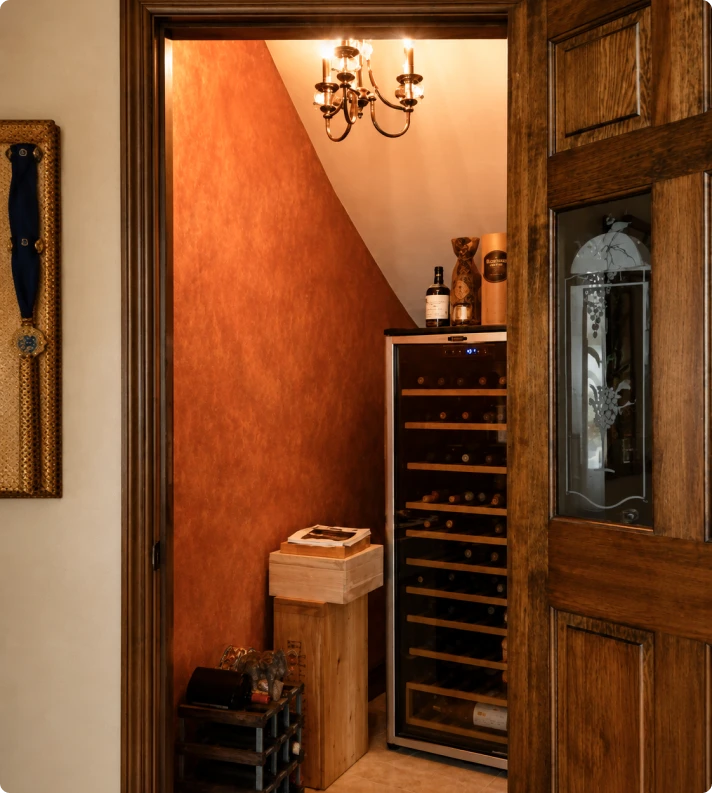
Limewash goes on in coats with a natural-bristle brush, each one worked in a cross pattern to build the movement. Plaster is troweled in thin passes and burnished by hand. Both are built up over multiple sessions with cure time between them, and neither can be rushed without showing it.
Bathrooms, kitchen splash zones, and high-traffic surfaces get a breathable sealer matched to the finish. Low-traffic interior walls are usually left to breathe.
Estimates are free and include a color consultation, and we can talk through what your walls will take before you commit to anything.
Call (727) 334-2348 or send us a note and we’ll get out to you.
Juan trained in Spain, on the Costa del Sol, where lime finishes are ordinary building practice rather than a specialty product. He's been in the trade 25+ years, 15+ of them painting Pinellas County homes.
The people applying the finish are on our payroll and have worked together for years. Specialty finishes are a hand skill, and hand skills don't survive a revolving door of subcontractors.
You see the finish in your own light, on your own wall, before we start the room.
Cleaning, repair, and the correct base coat decide whether a lime finish bonds or fails. There's no version of this where prep gets shortened to save a day.
Fully insured with $1 million in general liability coverage and workers' compensation, 150+ five-star Google reviews, and a company that's been working this county since 2011.
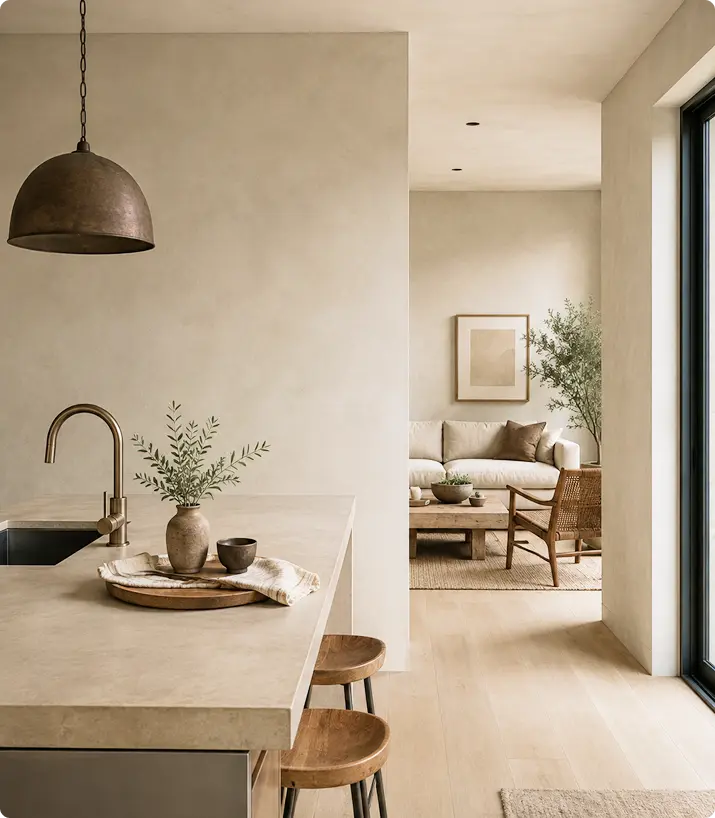
It’s usually a strong fit when:
It’s a weaker fit if you want an exactly even color across every wall, or if the surface is damaged enough that it needs structural repair first. We’ll say so at the estimate. There’s no sense selling you a finish that fights the wall it’s going on.
Both start with lime, and that’s where they part ways. Limewash is thin and brushed on, and it dries to a matte finish with a lot of cloudy movement in it. Venetian plaster is thicker, troweled in layers, and burnished until it comes up smooth and polished like stone. It has real powdered marble in it, which is why a polished wall reads like marble. Limewash suits larger wall areas. Venetian plaster suits the walls people get close to.
Yes. It’s applied by hand in multiple layers over several sessions, with cure time between them, and it takes a trained applicator rather than a crew with rollers. What drives your number is the square footage, the finish you choose, the condition of the walls, how much base-coat work they need, and the ceiling height. We’ll give you a written estimate with all of that broken out, at no cost.
Longer than a paint job of the same size. A single accent wall is usually a couple of days including cure time between coats. A full room runs several days, depending on the square footage and the prep. You’ll get a timeline in writing with your estimate.
No. Paint sits on top of a wall as a film, and a film is what peels. Lime finishes bond into the surface instead, so there is nothing sitting on top to lift. Where a room needs it, we seal the finish to match how the space actually gets used. And if you want a different look years from now, these can be refreshed rather than stripped back to bare wall.
Usually close, and we’ll be straight with you when we can’t. These are pigmented mineral finishes, so the color range works differently from a paint deck, and the same pigment reads differently depending on the light in the room and the texture of the application. That’s why we do sample boards. What you approve on your wall is what we apply.
Whether it’s one entry wall or a whole floor of the house, we’ll come out, look at what you have, and show you what the finish will actually look like in your light before you commit to it. Every job we do carries a written warranty of five years or more, covering workmanship and materials, and it’s our own crew from the first sample board to the last walkthrough.

