A door is the one surface in your house that gets touched every day and looked at every time you pull into the driveway. We refinish doors properly, with the hardware off and the cure time respected.
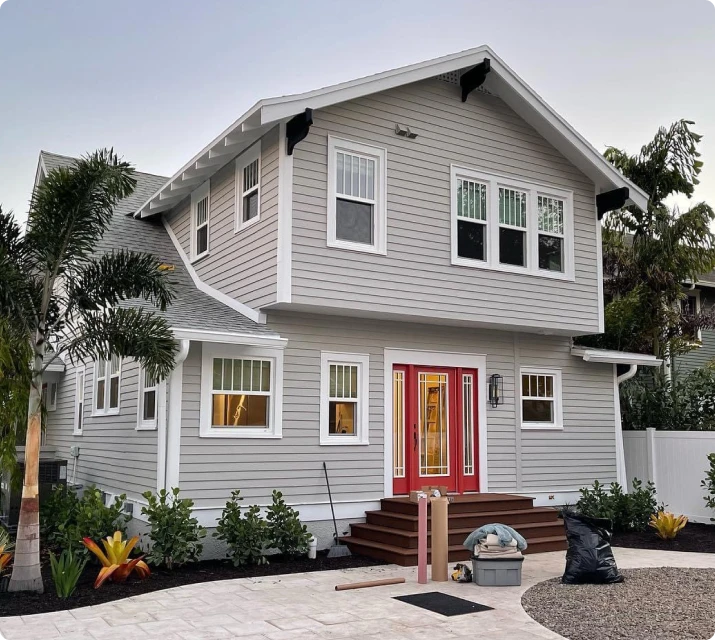
Most door repaints go wrong in the same place. Somebody brushes a coat over the existing finish, hangs the hardware back on before the paint has hardened, and by the second summer the latch edge is tacky and the color has gone flat on the sun side.
A door is a small surface that takes a hard life. It swings, it latches, it sits in the weather, and on the coast it collects salt every time the breeze comes off the water. Getting one to look right for years is less about the paint than about what happens before and after the paint goes on.
We do doors as their own scope of work, not as a leftover at the end of a bigger job.
Door work comes up in almost every house we visit, and it usually falls into one of these:
Front doors and entry doors, including fiberglass, steel and solid wood
Sidelights, transoms and door frames, so the whole opening reads as one piece
Garage-to-house doors and side service doors, which take more abuse than people expect
Interior doors throughout the house, most often when a homeowner is moving from stained wood to a painted finish
Sliders and French door frames, painted rather than the glazing
Exterior storm and screen door frames
Whole-house interior door counts are common here, and a house with 14 doors is a different job from a single front door. We price and schedule the two differently.
The finish on a door has to survive contact. Nothing else in a paint job does. That changes the sequence.
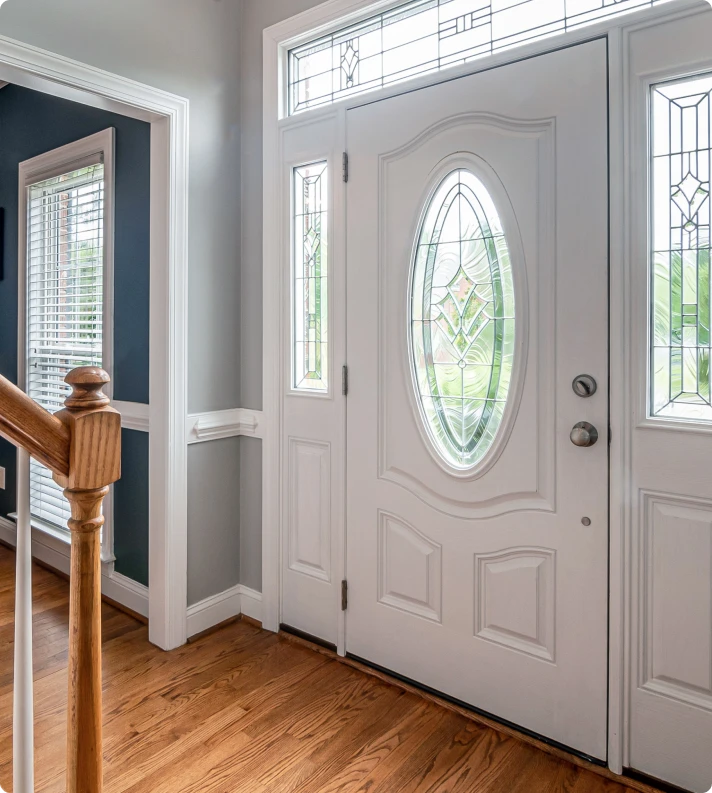
Knobs, deadbolts, hinges where the door can be taken down, kick plates, knockers, house numbers. Painting around hardware leaves a ridge you feel every time you use the door
Entry doors carry sunscreen, hand oils and road film. Interior doors carry the same around the handle. Anything oily under a new coat is a bond failure waiting to happen.
Gloss has no tooth. We take the sheen off and feather any chips or checking so the repair does not telegraph through.
Dents, old hardware holes, split stiles, and on wood doors the bottom rail, which is where water sits.
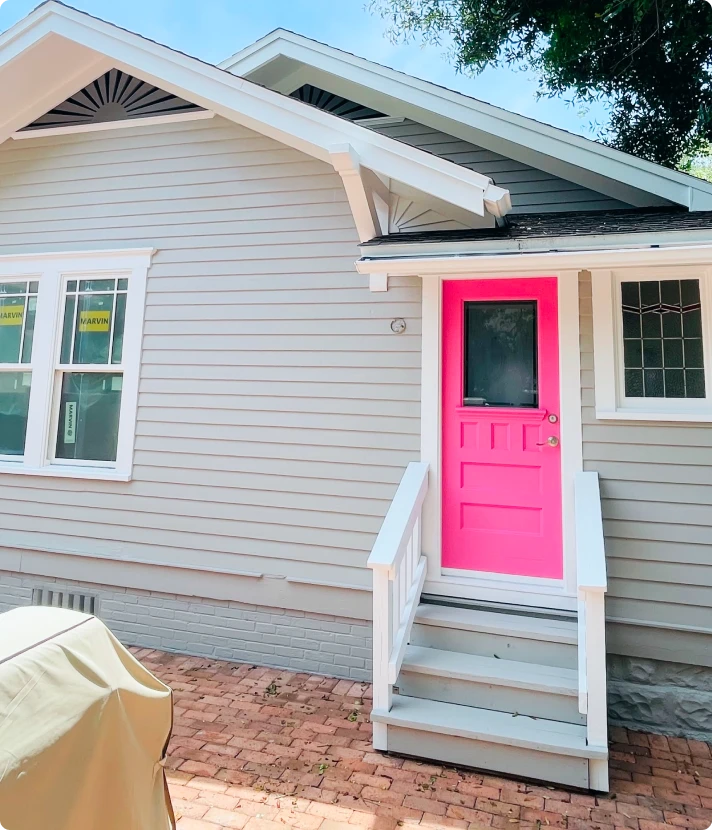
Bare wood, bare fiberglass, bare metal and any stain that could bleed. A previously painted door in sound condition may not need a full prime coat, and we will tell you which yours is.
Sprayed where the door can come down and be finished flat, brushed and tipped where it stays hung. Panel doors get worked in a set order so the panels, stiles and rails all lay off in the same direction.
This is the step people skip. A coating can be dry to the touch in an hour and still be soft for days. We reinstall hardware and return the door to service on the coating’s cure schedule, not on ours.
That last step is why a properly refinished door still closes cleanly two years later instead of sticking to the jamb.
An entry door in Seminole and an entry door two blocks off the Gulf are not the same problem.
Out on the beach communities, salt aerosol lands on everything and stays there. It works on fasteners, on the threshold, on the bottom edge of the door and on any hardware that is not solid brass or stainless. Salt also holds moisture against a surface, which is what turns a small finish failure into a peeling edge over one season.
The fixes are unglamorous and they work:
Rinse the door and the threshold with fresh water when you rinse the rest of the house.
Choose a coating rated for direct coastal exposure rather than a general-purpose exterior enamel.
Seal the top and bottom edges of a wood door, which is where almost every one of them fails first, and which is also the part nobody looks.
If your door faces south or west and takes full afternoon sun as well, tell us at the estimate.
That combination is the hardest one on this peninsula and it changes what we recommend.
We will come out, look at the door you have, and tell you straight whether it needs a refinish, a repair first, or nothing at all yet.
Call (727) 334-2348 or request an estimate and we will get on your calendar.
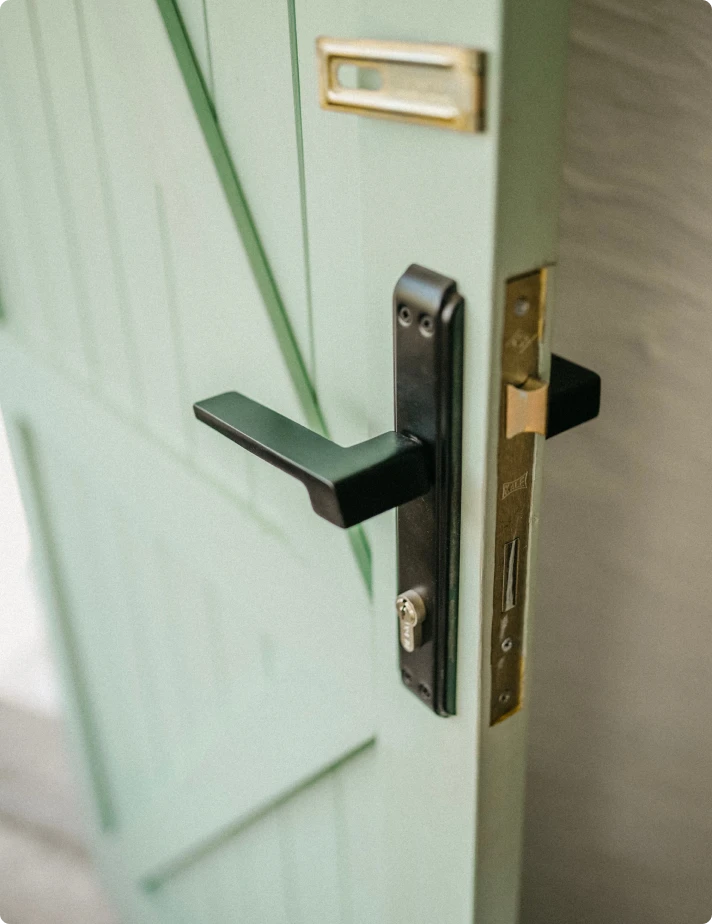
The front door is the one place on a Florida house where a homeowner will take a real color risk, and it is worth taking. A deep navy, a soft black, a warm green or a clean coastal blue all read beautifully against white or light stucco.
Two things to know before you commit. First, dark colors on a sun-facing door get genuinely hot, and heat is hard on both the coating and, on some doors, the substrate. There are darker colors formulated to reflect infrared while still looking dark, and they are the right call on a south or west entry. Second, the color you pick in the store will not look the same on your porch. Paint a sample directly on the door or on a board you hold against it, and look at it in the morning and again in the late afternoon.
That is part of the color consultation that comes with your estimate, and there is no charge for it.
The people finishing your door are on our payroll. Door work rewards a steady hand and a person who has done a lot of them, and that does not survive a revolving door of subcontractors.
We take the hardware off and we let the finish harden before the door goes back into daily use. Both of those cost us time. Both of them are why the finish holds.
Some doors are past refinishing. A rotted bottom rail or a delaminating fiberglass skin is not a paint problem. We will say so rather than sell you a coat of paint on top of it.
4.9 stars across 180+ Google reviews, fully insured with $1 million in general liability coverage and workers' compensation, and a company that has been working Pinellas County since 2011.
Usually yes, and for interior doors in an occupied house it is often the better choice. A door finished in place is brushed and tipped rather than sprayed, and done well it looks excellent. We take doors down when the finish quality demands a sprayed surface, when the edges need sealing, or when the door needs repair work that is easier on sawhorses. We will tell you which yours calls for at the estimate.
Dry to the touch is fast. Fully cured is not. Depending on the coating and the humidity that week, a door is back in light service within a day and fully hardened over roughly a week. We reinstall hardware and set your expectations for that specific product before we leave.
No, and most people do not. The exterior face and the interior face are two different rooms, visually. Painting the outside a deep color and the inside to match the interior trim is standard practice, and the edges get handled so the transition is clean when the door is closed.
It can, with the right product. Heat build on a dark, sun-facing door is real, and the fix is a coating formulated to reflect infrared energy rather than absorb it. Several manufacturers make these in genuinely dark colors. On a shaded or north-facing entry it matters much less.
Almost always. Fresh walls next to yellowed builder-grade doors is the most common thing we get called back about a year later. If it is a budget question, doing walls and doors in one visit costs less than doing them in two, because the setup and protection happen once. What drives the number is the door count, the condition, and whether they are flat or panel.
Whether it is one front door that has stopped looking like the rest of the house or every interior door in a 1970s block ranch, we will come out, look at what you have and give you a written estimate at no cost. Every job we do is backed by a written warranty of five years or more, covering workmanship and materials, and it is our own crew from the first sanding pass to the last hinge screw.


